Motor runs, door stays put
The trolley, drive gear, belt, chain, carriage, or door connection may have failed. The door itself must also be checked for binding or excess weight.
Serving Bonifay, Florida
Garage door opener service in Bonifay
Get a clear diagnosis when the motor runs, the door reverses, or remotes and keypads stop working.
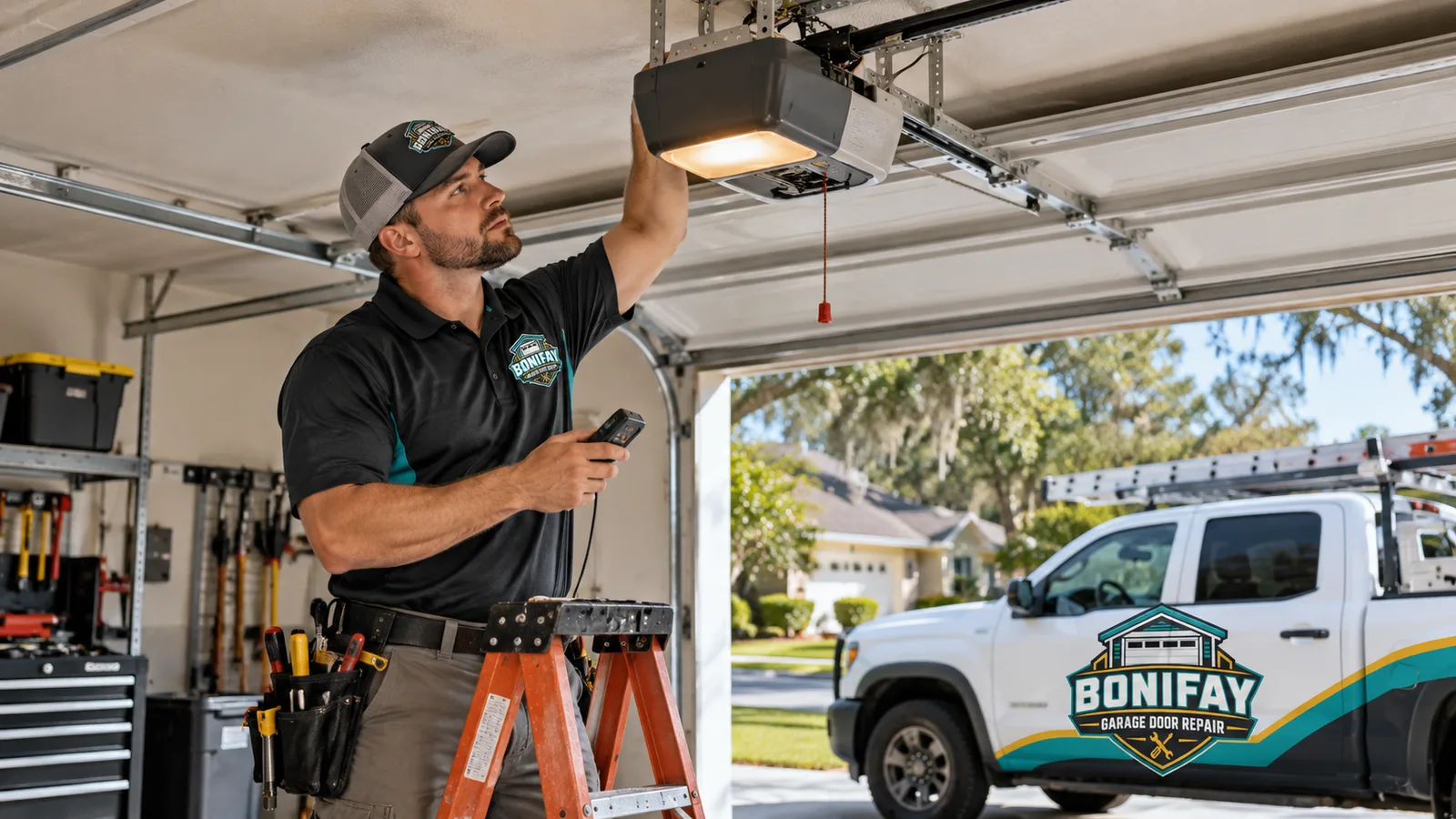
When a garage door opener hums but the door does not move, stops partway, or immediately reverses, the cause may be electrical, mechanical, or both. We evaluate the motor unit, rail, trolley, controls, safety sensors, wiring, and door movement.
With the opener disconnected, the door should move smoothly by hand and remain reasonably balanced. A broken spring, damaged cable, obstructed track, or binding roller can make a working opener appear faulty.
Northwest Florida's heat, humidity, thunderstorms, and wind-driven rain can affect electronics and exposed garage components. Corroded terminals, dirty photo-eye lenses, shifted sensor brackets, and power interruptions are checked before parts are replaced.
Opener symptom diagnosis
The behavior of the opener often points toward the part that needs attention. A motor that runs while the chain or belt remains still may have an internal drive or trolley problem. A door that closes nearly to the floor and then reverses may have an incorrect travel setting, excessive resistance, or a sensor issue. If the wall control works but a remote does not, the fault is more likely related to the transmitter, battery, programming, or receiver.
Blinking indicator lights also matter. Modern openers use diagnostic flashes or display codes to identify sensor wiring faults, motor overloads, travel errors, or control-board problems. The exact code varies by manufacturer, so it should be interpreted using the model information rather than guesswork.
Repeated operation is not a useful test when a door is binding or a motor is overheating. Stop using the opener if the door is crooked, a cable is loose, a spring is visibly broken, or the operator rail is flexing. Continuing to press the control can damage the opener or allow the door to move unpredictably.
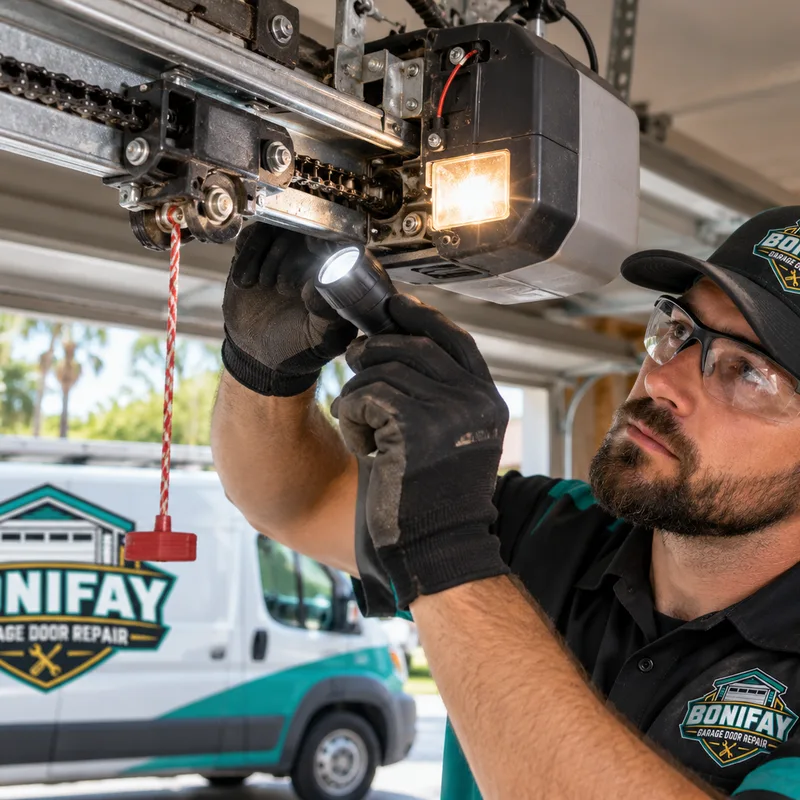
Opener faults and controls
The trolley, drive gear, belt, chain, carriage, or door connection may have failed. The door itself must also be checked for binding or excess weight.
Misaligned photo eyes, damaged sensor wiring, an obstruction, incorrect limits, or resistance in the door can interrupt closing.
Testing can isolate depleted batteries, lost programming, worn keypad buttons, signal interference, or a receiver problem.
The outlet, plug, circuit protection, wall control wiring, power supply, and logic board are checked in a safe order.
Loose mounting hardware, a dry rail, worn internal gears, poor chain tension, or a struggling door may create new sounds.
Lamp sockets, control wiring, lock mode, motion settings, and compatible replacement controls can be evaluated.
Safe closing operation
Photoelectric safety sensors are mounted near the bottom of the vertical tracks. One unit sends an invisible beam to the other. If that beam is blocked, misaligned, or interrupted by faulty wiring, a compliant opener should not power the door closed in the normal way. Cleaning the lenses and removing objects from the opening are sensible first checks, but sensors should not be bypassed or mounted out of position.
Travel limits tell the opener where to stop in each direction. Force settings determine how the unit responds to resistance. Raising the force to overcome a heavy, sticking, or poorly balanced door hides the underlying problem and can interfere with safe operation. The door should be corrected first, then the opener can be adjusted according to its design.
Federal safety rules have required entrapment-protection systems on residential garage door openers manufactured since the early 1990s. After an opener repair, closing behavior and the manufacturer's reversal tests should be checked. A functioning remote is convenient, but correct reversal and sensor response are the more important measures.
Diagnosis through verification
The process separates door resistance from operator faults, identifies the failed component, and verifies safe operation after approved work.
The visit begins with what the opener does, when the trouble began, and whether the wall control, keypad, or remotes behave differently.
With the door closed, the opener can be disengaged so balance, resistance, rollers, tracks, cables, and spring condition can be assessed.
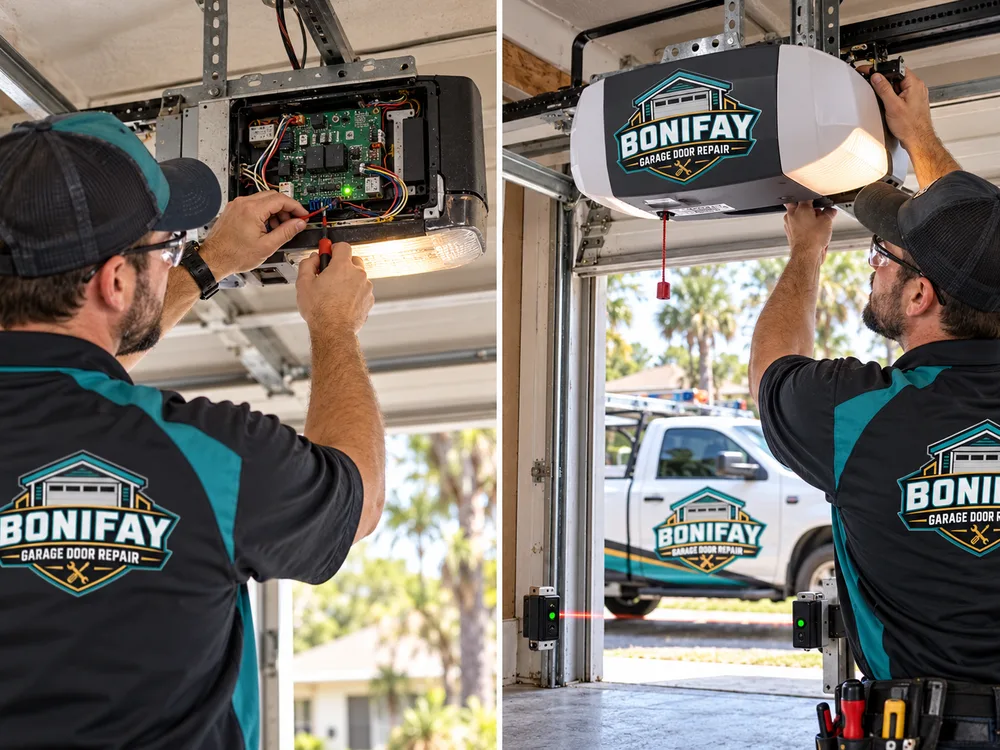
Power, controls, sensor alignment, wiring, travel, rail, trolley, drive components, and diagnostic indicators are examined.
We outline the failed component and whether repair is sensible compared with replacing an aging or incompatible operator.
After approved work, the door is cycled and the controls, limits, safety sensors, and reversal response are tested.
Repair versus replacement
Repair often makes sense when the opener is otherwise in sound condition and the fault is limited to a sensor, control, trolley, gear, wiring connection, or compatible accessory. Replacement may be the better choice when major parts are unavailable, multiple systems are failing, or the operator lacks current safety equipment.
Age alone does not settle the issue. Model identification, parts support, door weight, rail condition, and the failed part all matter. An opener should also be properly matched to the door. Horsepower labels are only part of that assessment because door balance and construction affect the load placed on the motor.
Compatibility matters for remotes and keypads as well. Devices that look alike may use different frequencies or security protocols. Recording the opener's brand, model number, and learn-button details can help identify the right control. Avoid posting or sharing any existing keypad access code when describing the problem.
Describe what the opener does, which controls still work, and any diagnostic lights you see. That information helps narrow the inspection before work begins.
CALL NOW: (850) 373-4233Common questions
Review common questions about motors, controls, safety sensors, door resistance, and operator repair.
The opener may have a stripped drive gear, disconnected trolley, broken belt or chain, or a failed carriage. A broken spring or binding door can create a similar symptom, so Bonifay Garage Door Repair checks manual door movement before deciding that the motor unit is at fault.
A blocked or misaligned safety sensor is a common cause, but incorrect travel settings and resistance in the door can also trigger reversal. In Bonifay garages, dust, moisture, bumped brackets, and damaged low-voltage wiring should be considered during the sensor inspection.
Yes. If the wall control operates the door, the issue may be the remote battery, lost programming, lock mode, an incompatible transmitter, interference, or the opener's receiver. The model and security protocol must match when selecting a replacement remote.
A keypad can often be reprogrammed or replaced if it is compatible with the opener. Worn buttons, battery failure, weather exposure, lost pairing, and receiver faults are possible causes; existing access codes should be kept private during service.
Disconnect power and stop operating the system if the door is crooked, the rail moves excessively, wiring is damaged, or the motor smells hot. Use the emergency release only when the door is fully closed, since a door with a failed spring may fall or be too heavy to control.
Many diagnostic visits and minor repairs can be completed during one appointment, but the timing depends on the fault and part availability. Older or less common opener models in the Bonifay area may require a compatible part to be identified before the work can be finished.
No. A powered opener is designed to move a properly balanced door, not compensate for a failed spring, damaged cable, or binding hardware. The door problem must be corrected before travel and force settings are finalized.
Share the opener brand and model, the door's exact behavior, which controls work, and any blinking lights or displayed codes. Photos of the motor label and sensors can also help us understand the equipment, but keypad access codes should never be included.
Arrange opener service
Tell us whether the motor runs, the door reverses, or a control has stopped responding. A focused inspection can identify the fault and clarify whether repair or replacement makes sense.